
What Makes an Online Monitoring System Valuable for Modern Industrial Operations?
2026-09-30
Modern industrial facilities need more than periodic inspections to maintain safe, efficient, and compliant operations. Environmental conditions, gas concentrations, emissions, and process parameters can change continuously, while manual measurement may only provide a snapshot at a particular moment. An Online Monitoring System offers a more continuous approach by collecting and analyzing operational or environmental data in real time. For industries where safety, environmental protection, and process stability are critical, this technology can provide faster awareness of abnormal conditions and support more informed operational decisions.
Beijing Zetron Technology Co., Ltd. develops monitoring and analytical solutions for industrial, environmental, research, and commercial applications. Its product portfolio includes gas analyzers, environmental monitoring equipment, air quality monitoring systems, and Continuous Emission Monitoring Systems (CEMS), providing options for different monitoring requirements.
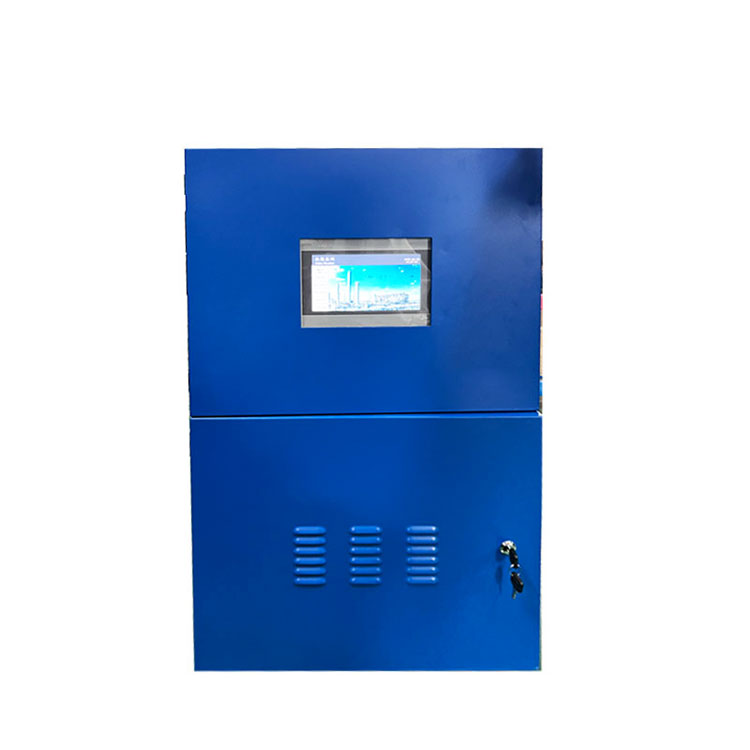
What Is an Online Monitoring System?
An Online Monitoring System is a technology solution designed to continuously collect, transmit, display, and analyze measurement data. Depending on the application, it can monitor gas concentration, particulate matter, temperature, humidity, pressure, emissions, or other critical parameters.
Compared with occasional manual testing, online monitoring creates a continuous stream of information. This allows operators to identify changes earlier and respond according to preset thresholds, operational requirements, or environmental standards.
A typical monitoring process includes:
-
Data collection – Sensors or analyzers measure target parameters.
-
Data transmission – Measurement results are transferred to a monitoring platform.
-
Data processing – The system organizes and analyzes collected information.
-
Real-time display – Operators can view current values and historical trends.
-
Alarm management – Abnormal readings can trigger alerts for timely intervention.
-
Data storage – Historical records can support analysis, reporting, and operational review.
For example, Zetron's CEMS-related solutions include continuous emission monitoring equipment, online gas analysis systems, and online differential UV spectrometers, demonstrating how online monitoring can be applied to industrial emission and gas-analysis scenarios.
Why Is Continuous Monitoring Important?
Industrial conditions rarely remain constant. Gas concentrations can fluctuate because of changes in production, ventilation, combustion, raw materials, or equipment operation. If measurement only takes place periodically, an abnormal event occurring between two inspections may not be immediately identified.
An Online Monitoring System helps turn monitoring from an occasional activity into an ongoing process.
Faster Identification of Abnormal Conditions
Real-time measurement can help operators recognize unusual changes as they occur. When monitored values exceed predefined thresholds, an alarm function can notify relevant personnel.
This is particularly valuable in applications involving potentially hazardous gases or sensitive production environments, where early awareness can help reduce operational risks.
Better Environmental Management
Environmental monitoring increasingly requires reliable and traceable data. Continuous monitoring can provide a more complete picture of emissions and environmental conditions than isolated manual measurements.
Zetron's product range includes environmental monitoring equipment, gas analyzers, flue gas analyzers, biogas analyzers, and continuous emission monitoring solutions, supporting different industrial and environmental applications.
More Efficient Operational Decisions
Historical monitoring data can reveal trends that are difficult to identify through individual measurements. Operators can compare current conditions with previous records, investigate unusual changes, and use data to support maintenance or process adjustments.
What Can an Online Monitoring System Monitor?
The actual parameters depend on the selected equipment and application. A properly configured system may monitor one parameter or combine multiple measurement points.
| Monitoring Target | Typical Purpose | Potential Application |
|---|---|---|
| Gas concentration | Detect and analyze specific gases | Industrial plants, laboratories |
| Flue gas | Evaluate emission conditions | Boilers, industrial facilities |
| Particulate matter | Monitor airborne particles | Cleanrooms, workplaces |
| Air quality | Assess environmental conditions | Buildings, industrial areas |
| Temperature & humidity | Maintain environmental stability | Laboratories, production areas |
| Emission parameters | Support continuous emission management | Power and manufacturing industries |
For cleanroom and pharmaceutical applications, online monitoring can also combine parameters such as suspended particles, temperature, humidity, differential pressure, and wind speed. Zetron's FMS materials describe continuous monitoring and data management for these types of controlled environments.
How Does an Online Monitoring System Improve Daily Operations?
The value of monitoring is not simply the ability to collect more data. The real benefit comes from turning measurement data into actionable information.
1. Reducing Dependence on Manual Inspection
Manual inspection requires personnel to visit measurement points, operate instruments, record values, and organize results. This process can consume significant time, particularly when multiple locations need to be checked.
An Online Monitoring System automates much of the measurement and recording process, allowing personnel to focus more on analysis and response.
2. Supporting Early Warning
When a monitored parameter moves beyond a predefined range, the system can provide an alarm. This creates an opportunity for operators to investigate the situation before a small deviation develops into a larger operational problem.
3. Building Historical Data
Continuous records make it easier to identify recurring fluctuations and long-term changes. Historical data can also support maintenance planning, process optimization, quality management, and environmental reporting.
4. Improving Remote Management
Modern monitoring solutions can be integrated with communication and data-management systems, allowing authorized personnel to access information without being physically present at every measurement location.
This is especially useful for large facilities, distributed production sites, or applications requiring continuous supervision.
Online Monitoring System vs. Manual Monitoring
Both approaches have practical applications, but they serve different operational needs.
| Feature | Online Monitoring | Manual Monitoring |
|---|---|---|
| Measurement frequency | Continuous or scheduled | Periodic |
| Data collection | Automated | Usually manual |
| Real-time visibility | High | Limited |
| Historical data | Automatically accumulated | Requires manual records |
| Alarm capability | Can support automatic alerts | Usually depends on operator |
| Large-area monitoring | Easier to scale | More labor-intensive |
| Response to sudden changes | Faster awareness | May be delayed |
For routine inspection of low-risk environments, manual measurement may remain practical. However, where continuous visibility and rapid response are important, an Online Monitoring System can provide a more comprehensive monitoring method.
Where Are Online Monitoring Systems Used?
The technology can be adapted to a wide range of industries.
Industrial Manufacturing
Factories can use monitoring systems to observe gas concentrations, emissions, air quality, and other process-related parameters.
Environmental Protection
Continuous emission and environmental monitoring can help organizations maintain consistent records and better understand changing conditions.
Pharmaceutical and Cleanroom Applications
Controlled environments require stable conditions and reliable monitoring. Online systems can monitor airborne particles, temperature, humidity, pressure differences, and other critical parameters.
Research Laboratories
Laboratories may require accurate monitoring of air quality or specific gases to maintain suitable working conditions.
Energy and Combustion Applications
Gas and flue gas analysis can provide information about combustion processes and emissions, helping operators understand operating conditions.
How Can Businesses Choose the Right System?
Selecting an Online Monitoring System should begin with the actual monitoring objective rather than simply choosing the system with the largest number of functions.
Consider these factors:
-
Target parameters: Determine exactly which gases, particles, or environmental conditions need to be measured.
-
Required accuracy: Match analyzer and sensor performance with application requirements.
-
Operating environment: Consider temperature, humidity, dust, corrosive gases, and other site conditions.
-
Response requirements: Determine whether real-time alarms or rapid data transmission are necessary.
-
Data management: Check whether historical storage, trend analysis, and reporting are required.
-
Integration: Consider compatibility with existing monitoring, control, or data-management infrastructure.
-
Customization: Different industries may require different combinations of sensors, analyzers, sampling systems, and communication functions.
A system should ultimately be selected according to the facility's specific operating conditions and monitoring objectives.
Why Choose Beijing Zetron Technology Co., Ltd.?
Beijing Zetron Technology Co., Ltd. focuses on gas detection, environmental monitoring, and analytical solutions. According to its company information, Zetron has experience in gas detection and environmental monitoring and offers products including portable gas detectors, fixed detection systems, gas analyzers, air quality monitoring systems, and related monitoring solutions.
Its online monitoring portfolio covers applications such as CEMS, gas online analysis, atmospheric pollutant monitoring, and online differential UV analysis.
Zetron also states that it supports customized solutions and international cooperation, making application-specific configuration an important part of its product approach.
For buyers, this means the focus can extend beyond purchasing an individual analyzer. The appropriate monitoring equipment can be considered according to the measured substance, operating environment, installation requirements, and intended monitoring purpose.
What Results Can Businesses Expect?
When correctly selected and implemented, an Online Monitoring System can create several practical improvements:
-
More continuous visibility of critical parameters
-
Faster awareness of abnormal readings
-
Reduced dependence on repetitive manual measurements
-
Better access to historical monitoring data
-
More efficient environmental and process management
-
Improved support for maintenance and operational decisions
-
More structured monitoring records
-
Greater flexibility for remote or centralized supervision
The actual results will depend on the monitored parameters, equipment configuration, installation conditions, and operating environment.
Conclusion
An Online Monitoring System provides more than real-time numbers. It creates a continuous connection between physical conditions and operational decision-making. By combining sensors or analyzers, data acquisition, communication, data storage, visualization, and alarm functions, businesses can gain a clearer understanding of what is happening inside their facilities.
For industries dealing with gas detection, environmental protection, emission control, air quality, or controlled production environments, continuous monitoring can become an important part of a modern management strategy.
With experience in gas detection, environmental monitoring, gas analysis, and CEMS solutions, Beijing Zetron Technology Co., Ltd. can provide monitoring equipment and customized solutions for different application requirements. If you are looking for a suitable Online Monitoring System for industrial, environmental, laboratory, or cleanroom applications, contact us to discuss your monitoring objectives and explore a solution designed around your specific requirements.